
Keratosis Pilaris: What It Is and How to Treat “Chicken Skin” Naturally
What Is Keratosis Pilaris?
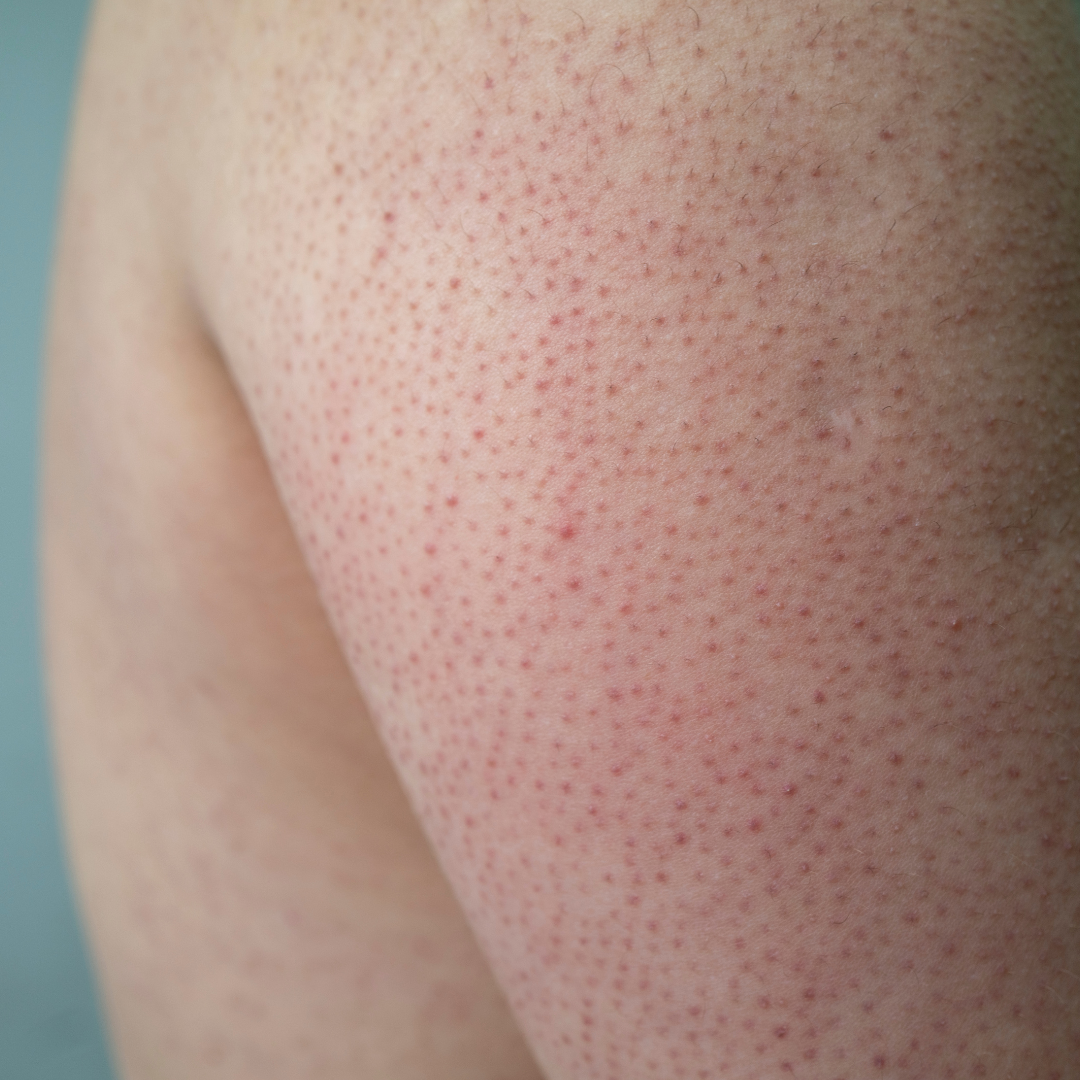
Keratosis pilaris (KP) is a very common skin condition that causes small, rough bumps on the skin. These bumps usually appear on the upper arms, thighs, cheeks, or buttocks and are often described as looking like “chicken skin.”
Keratosis pilaris develops when keratin, a natural protein found in skin, hair, and nails, builds up around hair follicles. Instead of shedding normally, the keratin plugs the follicle opening and forms small bumps.
While KP can feel frustrating, it is harmless and very common. Studies estimate that keratosis pilaris affects:
50–80% of teenagers
around 40% of adults
KP is also more common in people who have dry skin, eczema, or a family history of the condition.
Because keratosis pilaris is closely connected to dryness and skin barrier health, understanding how to support the skin barrier can help improve its appearance. Our guide to Skin Barrier Repair explains why maintaining the skin barrier is essential for healthy skin.
What Causes Keratosis Pilaris?
Many people wonder what causes keratosis pilaris. The condition develops when excess keratin builds up around hair follicles, blocking the pores and creating the small, rough bumps commonly called “chicken skin.”
Keratosis pilaris occurs when keratin builds up and blocks hair follicles, but several factors can contribute to this process.
Common triggers include:
Dry skin
Dry skin can make keratin buildup more noticeable and worsen the appearance of bumps. Our article on Understanding Dry Skin explains why dryness happens and how to support healthy skin.
Genetics
KP often runs in families. If one or both parents have keratosis pilaris, children are more likely to develop it.
Hormonal changes
Keratosis pilaris often becomes more noticeable during childhood, puberty, and pregnancy due to hormonal shifts.
Skin barrier disruption
Harsh cleansers, hot showers, and irritating ingredients may weaken the skin barrier, which can worsen dryness and make KP more visible.
Where Does Keratosis Pilaris Usually Appear?
KP bumps most commonly appear on:
• upper arms
• thighs
• buttocks
• cheeks (especially in children)
The bumps are usually skin-colored or slightly red and may feel rough or sandpaper-like to the touch.
Why Keratosis Pilaris Often Appears on the Upper Arms
One of the most common places keratosis pilaris appears is on the upper arms. Many people first notice small, rough bumps on the back of their arms that feel dry or slightly sandpaper-like to the touch.
This area of the body tends to develop keratosis pilaris because the skin on the upper arms can become dry more easily, which makes keratin buildup around hair follicles more noticeable.
When the skin barrier becomes dry or irritated, keratin may accumulate instead of shedding normally. This can lead to the rough bumps commonly associated with keratosis pilaris on the arms.
Supporting the skin barrier with gentle cleansing, consistent moisturizing, and avoiding irritating ingredients can help improve the appearance of these bumps over time.
Keratosis Pilaris Treatment Options
There is no permanent cure for keratosis pilaris, but several treatments can help improve the appearance of the bumps.
Most keratosis pilaris treatments focus on three key goals:
• gently removing excess dead skin buildup
• keeping the skin well moisturized
• supporting the skin barrier to reduce dryness and irritation
Many people searching for how to get rid of keratosis pilaris find that a simple routine of gentle cleansing, light exfoliation, and consistent moisturizing can help improve skin texture over time.
The steps below outline practical ways to build a routine that supports skin affected by keratosis pilaris.
How to Improve Keratosis Pilaris Naturally
Many people searching for how to get rid of keratosis pilaris find that consistent gentle exfoliation, barrier-supporting moisturizers, and avoiding irritating ingredients can significantly improve the appearance of the bumps over time. While keratosis pilaris cannot always be completely eliminated, gentle skincare and barrier support can help significantly improve the appearance of the skin.
1. Avoid Harsh Cleansers
Many foaming cleansers contain sodium lauryl sulfate (SLS) or sodium laureth sulfate (SLES). These detergents can strip natural oils from the skin and worsen dryness.
Instead, choose gentle body washes that cleanse without disrupting the skin barrier. Our Kosmatology Body Wash is formulated to cleanse effectively while helping maintain moisture balance.
Harsh cleansers and aggressive scrubbing can irritate the skin barrier and worsen dryness. Learning gentle cleansing techniques can help support healthier skin. Our guide on How to Wash Your Face Properly explains how to cleanse the skin without stripping its natural protective oils.
2. Avoid Synthetic Fragrance
Fragrance is one of the most common causes of skin irritation in personal care products. For people with sensitive skin or keratosis pilaris, fragrance can increase redness or dryness.
Our article Why Fragrance-Free Skincare Matters explains why many dermatologists recommend fragrance-free products for reactive skin.
3. Take Warm (Not Hot) Showers
Hot showers can strip natural oils from the skin and worsen dryness. Warm water is gentler on the skin barrier and helps prevent moisture loss.
4. Exfoliate Gently
Exfoliation can help remove dead skin cells and reduce the rough texture associated with KP.
However, it’s important not to over-exfoliate, which can irritate the skin and make bumps worse.
A gentle exfoliation routine may include:
• mild physical exfoliation (salt or sugar scrubs)
• soft washcloths or exfoliating mitts
• exfoliating only 1–2 times per week
5. Moisturize Immediately After Showering
Moisturizing is one of the most important steps in managing keratosis pilaris.
Applying moisturizer immediately after bathing helps lock moisture into the skin and support the skin barrier.
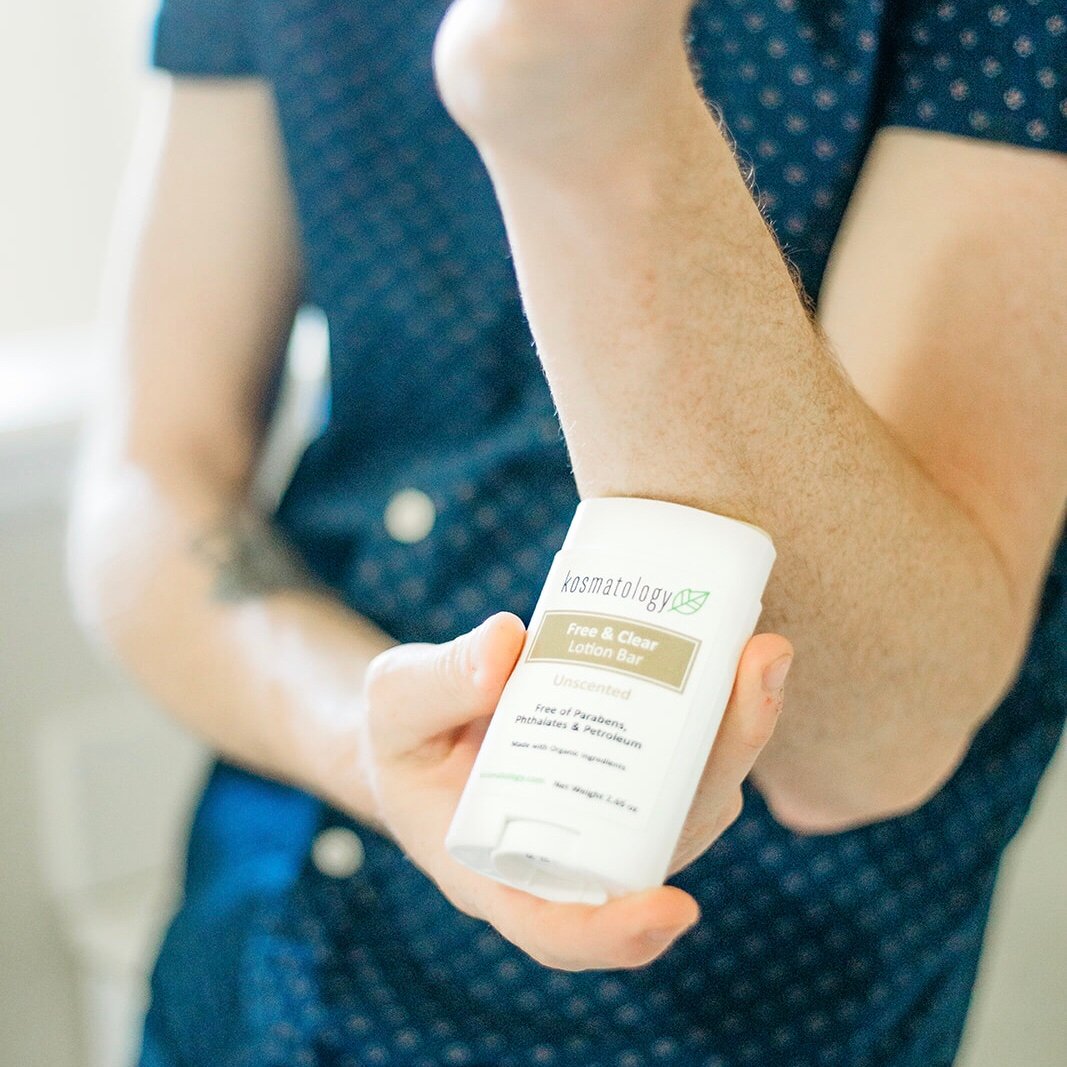
Waterless moisturizers like lotion bars provide concentrated hydration without the alcohol or fillers often found in traditional lotions.
Our Kosmatology Lotion Bars are made with nourishing oils and butters designed to help support dry, sensitive skin.
Can Keratosis Pilaris Be Cured?
Keratosis pilaris does not currently have a permanent cure, but it is a very manageable skin condition. Many people notice that the bumps become less noticeable with consistent skincare and gentle routines.
Because keratosis pilaris is related to keratin buildup and dry skin, treatments typically focus on improving skin texture and supporting the skin barrier rather than eliminating the condition entirely.
For many individuals, keratosis pilaris improves gradually over time, especially after adolescence. Even when it persists into adulthood, maintaining a gentle skincare routine can help keep the skin smoother and more comfortable.
Final Thoughts
Keratosis pilaris is extremely common and usually harmless, but it can feel frustrating when skin appears rough or bumpy.
Focusing on gentle cleansing, fragrance-free skincare, and consistent moisturizing can help improve the appearance of keratosis pilaris over time.
Supporting the skin barrier and avoiding irritating ingredients are often the most effective long-term strategies for managing KP.
Frequently Asked Questions About Keratosis Pilaris
-
A: No. Keratosis pilaris is not caused by poor hygiene. It occurs due to keratin buildup in hair follicles and is often linked to genetics and dry skin.
-
A: KP often improves with age, especially after adolescence. While it may not disappear completely, consistent skincare can significantly improve its appearance.
-
A: Yes. Keratosis pilaris is more common in people who have dry skin or eczema, because both conditions are linked to a weakened skin barrier.
-
A: Yes. Moisturizing helps soften the skin and support the skin barrier, which can reduce the rough texture associated with KP.
-
A: No. Over-exfoliating can irritate the skin and worsen KP. Most dermatologists recommend exfoliating once or twice per week.

About the Author
Janis Covey, PharmD
Compounding pharmacist and founder of Kosmatology, Janis formulates gentle skincare designed for sensitive skin and families. Her work focuses on ingredient transparency, skin barrier support, and simple routines that help skin stay comfortable and healthy. Learn more about her approach to skincare on the About Kosmatology page.
Related Reading
• Understanding Dry Skin
• Skin Barrier Repair: Why It Matters
• Why Fragrance-Free Skincare Matters
• The Complete Sensitive Skin Guide