When you think about vegan skincare, you might picture products made with plant oils, botanical extracts, and natural butters. But there's one ingredient that often surprises people: beeswax.
Beeswax is commonly used in solid skincare products, including lotion bars and lip balms. While it's a natural ingredient, it comes from bees, which means products containing beeswax aren't considered vegan.
So, can a lotion bar be vegan? Absolutely!
At Kosmatology, all of our skincare products are 100% vegan, including our lotion bars. Instead of beeswax, we use a plant-based alternative called candelilla wax.
But our decision to use candelilla wax goes beyond creating vegan skincare. As a compounding pharmacist and skincare formulator, I carefully consider how ingredients work together, how they feel on the skin, and how they contribute to the overall formulation.
Let's take a closer look at what makes a lotion bar vegan, how candelilla wax compares to beeswax, and why we chose it for Kosmatology.
What Makes a Lotion Bar Vegan?
A lotion bar is a solid moisturizer made from a combination of oils, butters, and waxes. Unlike traditional liquid lotions, lotion bars don't contain added water.
The warmth of your skin softens the bar as you apply it, allowing the oils and butters to spread across the skin and help reduce moisture loss.
However, not every lotion bar is vegan.
Many traditional lotion bar recipes contain beeswax, which helps give the bar its solid structure. Because beeswax is produced by honeybees, it is an animal-derived ingredient.
A vegan lotion bar uses plant-derived ingredients instead, such as:
Shea butter to soften and condition skin
Coconut oil to provide emollient properties
Olive oil to help moisturize skin
Candelilla wax to provide structure and consistency
The result is a solid moisturizer that doesn't require animal-derived ingredients.
What Is Candelilla Wax?
Candelilla wax comes from a cactus-like desert shrub native to Mexico and the southwestern United States. Its slender, green stems are covered in a natural waxy coating that helps protect the plant from moisture loss in its hot, dry environment.
In skincare formulations, candelilla wax is valued for its ability to provide structure, create a smooth texture, and help form a protective film on the skin. Because it comes from a plant rather than an animal, it's a popular alternative to beeswax in vegan lip balms, lotion bars, and other solid skincare products.
Candelilla Wax vs. Beeswax: What's the Difference?
Although both ingredients can help create solid skincare products, they have some important differences.
| Feature | Candelilla Wax | Beeswax |
|---|---|---|
| Source | Candelilla plant | Honeybees |
| Vegan | Yes | No |
| Texture | Harder, more brittle | Softer, more pliable |
| Melting Point | Approx. 68–73°C | Approx. 62–65°C |
| Role in Skincare | Provides structure and forms a protective film | Provides structure and forms a protective film |
| Common Uses | Vegan lotion bars, lip balms, cosmetics | Lotion bars, lip balms, cosmetics |
One important consideration when formulating with candelilla wax is that it is generally harder than beeswax. It isn't necessarily a one-to-one substitute.
The amount used must be carefully balanced with the other ingredients to create a lotion bar that holds its shape but still glides comfortably across the skin.
Why I Chose Candelilla Wax for Kosmatology Lotion Bars
As a compounding pharmacist, I've spent years working with ingredients and understanding how they interact in different formulations.
When developing Kosmatology's lotion bars, I wanted a product that would provide rich moisture, feel comfortable on the skin, and be convenient enough for everyday use. I also wanted to create skincare without animal-derived ingredients. Candelilla wax allows me to achieve the solid consistency needed for a lotion bar while keeping the formulation completely vegan.
But the wax is only one part of the formula.
Our lotion bars combine candelilla wax with organic shea butter, coconut oil, and olive oil. Each ingredient contributes something different to the finished product.
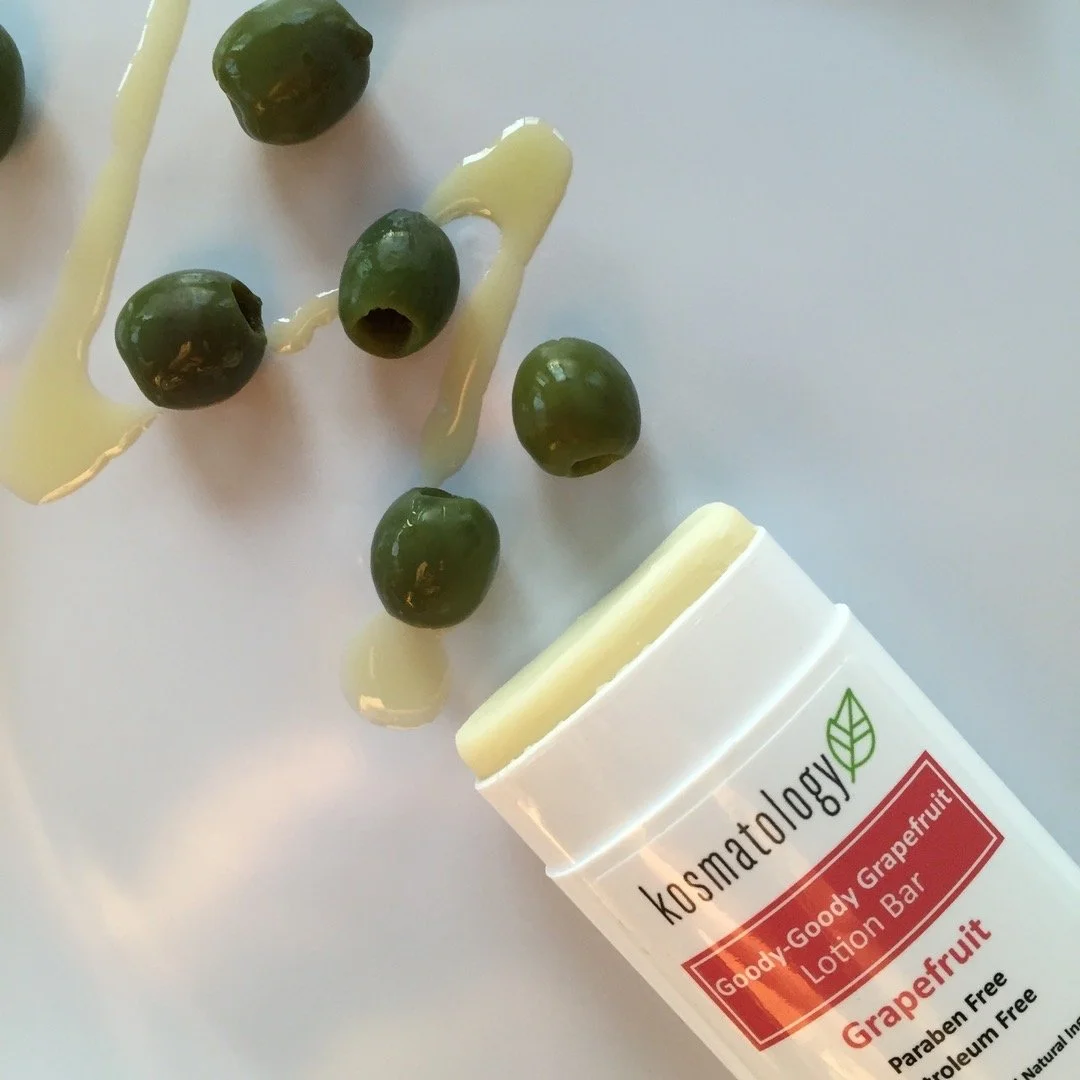
Shea butter is rich in fatty acids and helps soften and condition dry skin.
Coconut oil acts as an emollient, helping skin feel smoother and reducing moisture loss.
Olive oil provides additional emollient properties that help maintain skin softness.
Candelilla wax gives the lotion bar its structure and contributes to the protective layer left on the skin.
Getting the balance right is important. Too much wax can create a bar that feels overly hard or doesn't spread easily. Too little can produce a bar that becomes too soft.
The goal is a solid moisturizer that softens with the warmth of your skin and leaves it feeling nourished without unnecessary ingredients.
Are Vegan Lotion Bars Good for Sensitive Skin?
Vegan skincare can be a great option for people who prefer plant-based ingredients, but there's an important distinction I always like to make:
Vegan doesn't automatically mean a product is suitable for sensitive skin.
Plant-based ingredients can still cause irritation or allergic reactions in some individuals. Essential oils, for example, are natural ingredients, but they can be irritating to certain skin types.
That's why I always recommend looking at the complete formulation rather than focusing on one claim.
For people with sensitive or eczema-prone skin, choosing a moisturizer without added fragrance or essential oils may help reduce exposure to potential irritants.
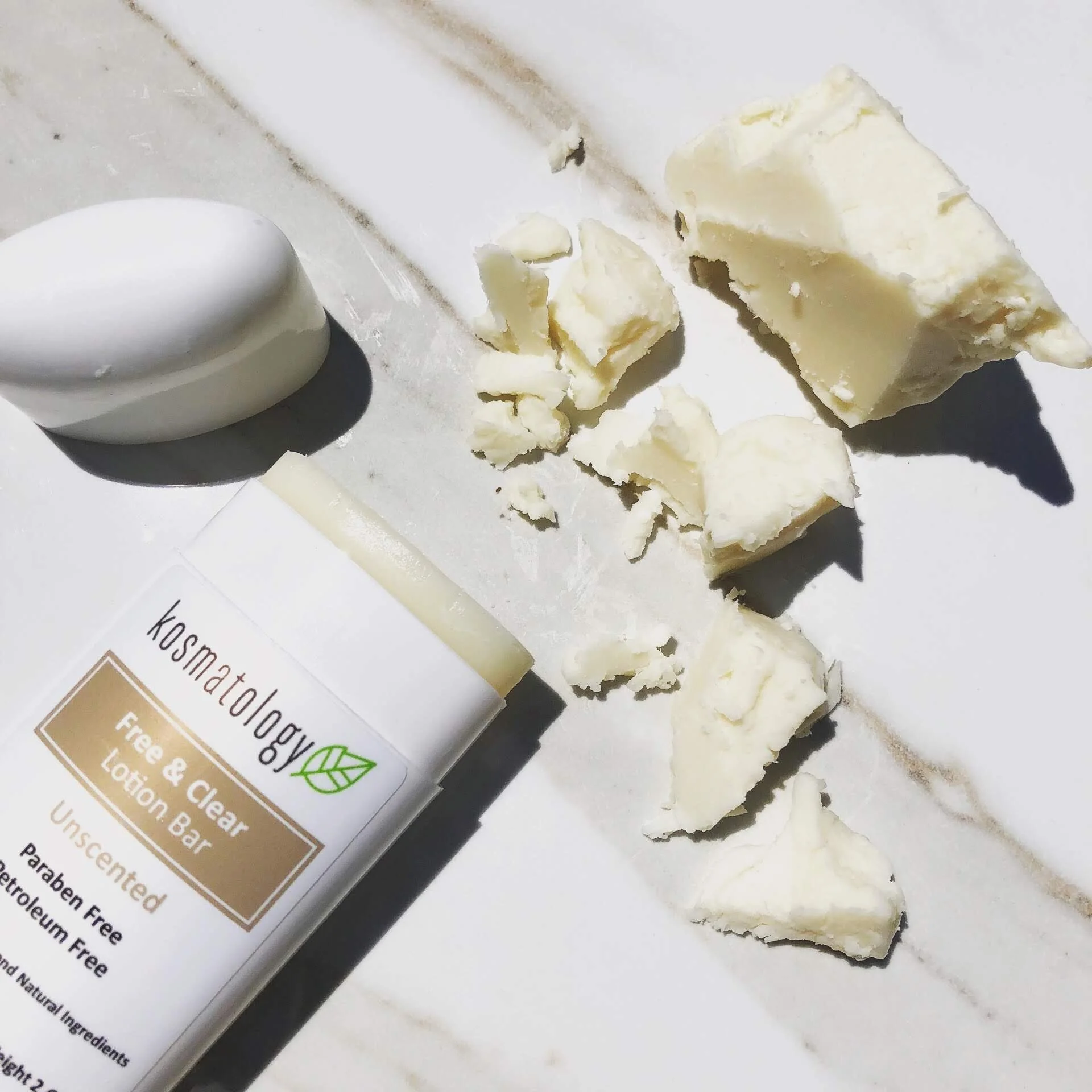
Our Free & Clear skincare collection includes an unscented lotion bar formulated without essential oils or added fragrance.
It's a good place to start for anyone who prefers a simpler skincare routine.
You can also explore our Sensitive Skin Skincare Guide for more information about choosing gentle skincare products.
Why Waterless Skincare Matters
Another benefit of lotion bars is their waterless format.
Traditional liquid lotions typically contain water along with oils, emulsifiers, and preservatives. Because water can support microbial growth, properly formulated water-based skincare generally requires an effective preservation system. Waterless lotion bars don't require the same type of water-based preservation system when properly formulated and used. Instead, they deliver a concentrated combination of oils, butters, and waxes.
I particularly like lotion bars because they're practical for everyday use. They can be applied directly to dry areas, are easy to carry when traveling, and eliminate the need for a liquid moisturizer bottle. Their solid format can also help reduce packaging waste, particularly when paired with thoughtfully selected packaging materials.
If you'd like to learn more, read our article about waterless skincare.
Vegan and Cruelty-Free: Are They the Same Thing?
These terms are often used together, but they mean different things.
Vegan skincare means a product does not contain animal-derived ingredients, such as beeswax, lanolin, or carmine.
Cruelty-free skincare refers to animal-testing practices rather than the ingredients themselves.
A product can be cruelty-free without being vegan, and a vegan product isn't automatically cruelty-free.
At Kosmatology, both are important.
All Kosmatology products are vegan, and our brand is Leaping Bunny Certified and recognized by PETA for its cruelty-free practices.
Our skincare line is also MADE SAFE® Certified, meaning its ingredients undergo screening against the certification program's standards for substances associated with harm to human health and the environment.
For me, these commitments reflect a broader approach to formulation: being thoughtful about the ingredients we choose and transparent about what's in our products.
Choosing a Vegan Lotion Bar
If you're shopping for a vegan lotion bar, here are a few things I recommend looking for:
Check the ingredient list. Look for plant-based waxes such as candelilla wax instead of beeswax.
Consider your skin's needs. If you have sensitive skin, an unscented option may be preferable.
Look beyond marketing claims. Terms like “vegan” and “natural” don't tell you everything about a product's ingredients, quality, or formulation.
Consider the complete formula. A good lotion bar should combine ingredients that provide structure, spreadability, and moisturizing benefits.
Look for credible certifications. Third-party certifications can help you better understand a brand's ingredient and animal-testing standards.
Our Kosmatology Organic Lotion Bars are available in several essential-oil scent combinations, as well as Free & Clear for those who prefer unscented skincare.
Frequently Asked Questions About Vegan Lotion Bars
-
No. Many lotion bars contain beeswax, which is an animal-derived ingredient. Vegan lotion bars use plant-based alternatives such as candelilla wax to provide structure.
-
Yes. Candelilla wax is derived from the candelilla plant and is commonly used as a vegan alternative to beeswax in skincare products.
-
Both waxes have useful properties in skincare formulations, but the key difference is their source. Beeswax is produced by honeybees and is therefore not considered vegan. Candelilla wax is derived from a plant, making it a vegan alternative to beeswax. At Kosmatology, we use candelilla wax to give our lotion bars their solid structure while keeping our formulations 100% plant-based.
-
Candelilla wax is used in many cosmetic formulations, but individual skin sensitivities vary. A product's overall formulation matters more than any single ingredient. If your skin is particularly reactive, consider an unscented product and review the full ingredient list.
-
No. Kosmatology lotion bars are 100% vegan and use plant-based candelilla wax instead of beeswax.
-
Yes! Every Kosmatology product is formulated without animal-derived ingredients. Our entire skincare line is vegan, not just our lotion bars and lip balms.
A Thoughtful Approach to Skincare
When I started Kosmatology, my goal was to create gentle, thoughtfully formulated skincare inspired by my own family's needs.
That philosophy continues to guide the ingredients I select today.
Choosing candelilla wax instead of beeswax is one example of how formulation decisions can support both product performance and our commitment to vegan skincare.
Whether you're looking for a solid moisturizer, trying to simplify your skincare routine, or searching for a cruelty-free alternative to traditional lotion bars, I believe understanding what's in your products is an important part of making informed choices.
Ready to try a vegan lotion bar?
Explore Kosmatology's Vegan Lotion Bars
Related Reading
Want to learn more about the ingredients and science behind gentle, plant-based skincare? Explore these articles:
What Is Waterless Skincare? Discover how solid skincare products work, why they don't need added water, and the benefits of concentrated formulations.
What Is the Best Moisturizer for Kids With Eczema? Learn what to look for when choosing moisturizers for delicate, eczema-prone skin.
Understanding Dry Skin: Causes, Prevention, and How to Restore Your Skin Barrier Explore why skin loses moisture and how the right ingredients can help support a healthy skin barrier.