
When you hear the word gluten, you probably think about bread, pasta, and other foods. But did you know that gluten-containing ingredients can also be found in skincare products? For people with celiac disease, gluten sensitivity, or certain ingredient allergies, understanding what's in their skincare products can raise some important questions.
Can gluten be absorbed through the skin? Should you avoid gluten in lotions and hand soaps? What about lip balm? And why do some skincare brands advertise their products as gluten-free?
As a Doctor of Pharmacy, compounding pharmacist, and skincare formulator, I believe it's important to understand not only what's in our skincare products but also how those ingredients interact with the body.
Let's look at what the science tells us about gluten in skincare, when it may be a concern, and what to look for on ingredient labels.
What Is Gluten, and Why Is It Used in Skincare?
Gluten is a group of proteins naturally found in wheat, barley, and rye. While most people associate gluten with food, ingredients derived from these grains can also appear in cosmetics and personal care products. Some skincare and haircare formulations contain wheat-derived proteins or botanical extracts because of their conditioning properties. Hydrolyzed wheat protein, for example, is sometimes added to products to help improve the feel of skin or hair.
You might find grain-derived ingredients in products such as:
Facial moisturizers and lotions
Shampoos and conditioners
Body washes and cleansers
Lip balms and lip products
Makeup and other cosmetics
However, not every ingredient derived from wheat or another grain necessarily contains gluten. Processing methods and the specific ingredient composition matter.
This is why understanding ingredient labels can be more useful than simply avoiding anything with a grain-related name.
Can Gluten Be Absorbed Through Your Skin?
One of the biggest misconceptions about gluten in skincare is that applying a product containing gluten will trigger celiac disease in the same way eating gluten does.
For most people with celiac disease, gluten-containing skincare products are not a concern when applied to intact skin.
Celiac disease is an autoimmune condition in which ingesting gluten triggers an immune response that damages the lining of the small intestine. Gluten proteins are generally too large to penetrate the skin's protective barrier in a way that would trigger the intestinal autoimmune response associated with celiac disease. This means applying a lotion containing gluten is not the same as eating a food containing gluten.
However, there are important exceptions to consider, particularly when products may accidentally be ingested or when someone has an allergy to a specific ingredient.
When Should You Be Concerned About Gluten in Skincare?
Although topical gluten exposure generally isn't a problem for people with celiac disease, there are situations where paying closer attention to ingredients makes sense.
1. Lip Balms and Lip Products
Lip balm is one of the skincare products I would pay particular attention to if you have celiac disease. Unlike a lotion applied to your legs or arms, lip balm is used directly on the lips, where small amounts may be swallowed throughout the day. Lipsticks, lip glosses, and other lip products can present the same potential for accidental ingestion.
For someone who must strictly avoid ingesting gluten, choosing lip products made without gluten-containing ingredients can provide additional reassurance.
2. Hand Soaps and Hand Lotions
Think about how often your hands come into contact with your mouth throughout the day. You might apply hand lotion before eating, touch your lips, or prepare food shortly after using a personal care product. While the risk from ordinary topical exposure is generally low, avoiding gluten-containing ingredients in products used on the hands may be a reasonable personal preference for someone managing celiac disease.
Proper handwashing is also important. Washing with soap and water helps remove residues from the hands before eating.
3. Wheat Allergies
This is where it's especially important to distinguish between celiac disease and an allergy.
Celiac disease and wheat allergy are not the same condition.
Celiac disease involves an autoimmune response to ingested gluten. A wheat allergy involves an immune response to specific wheat proteins. Depending on the individual and the proteins involved, wheat-derived ingredients in skincare products may cause allergic reactions following skin contact.
For someone with a diagnosed wheat allergy, it's important to review ingredient labels carefully and follow guidance from their allergist.
4. Young Children
Young children frequently put their hands and other objects into their mouths.
For families managing celiac disease or food allergies, products that may be accidentally swallowed deserve additional consideration.
Choosing simple formulations and understanding the ingredients in products used around the mouth can help parents make informed decisions.
How Can You Identify Gluten-Derived Ingredients in Skincare?
Unlike food labels, cosmetic ingredient lists aren't always easy to interpret.
Some ingredients have familiar names, while others appear under botanical or scientific names.
Examples of ingredients worth investigating include:
Hydrolyzed Wheat Protein: A wheat-derived ingredient commonly used for conditioning.
Triticum Vulgare: The botanical name for common wheat, which may appear in ingredient names such as wheat protein or wheat extract.
Hordeum Vulgare: The botanical name for barley, which may appear in barley-derived extracts.
Secale Cereale: The botanical name for rye, which may appear in rye-derived ingredients.
It's important to remember that a grain-derived ingredient doesn't automatically mean the finished product contains gluten. Some highly refined ingredients may contain little or no residual protein. If you have celiac disease or an ingredient allergy and are unsure about a product, contacting the manufacturer is often the best approach. Ask whether the formulation contains gluten-derived ingredients and whether the manufacturer has information about potential cross-contact during production.
What About Corn in Skincare?
Gluten isn't the only food-related ingredient that raises questions in skincare.
Corn-derived ingredients are also used in some cosmetic formulations.
Depending on the ingredient, corn derivatives may serve as humectants, absorbents, thickeners, or other functional components.
Examples include:
Zea Mays (Corn) Starch
Zea Mays (Corn) Oil
Certain ingredients made from corn-derived glucose or other carbohydrates
However, ingredients such as glycerin, citric acid, and tocopherol can be manufactured from several different raw-material sources, including corn.
You cannot always determine whether an ingredient is corn-derived simply by reading its name on the label.
It's also important to understand that corn is naturally gluten-free. Avoiding corn is a separate consideration from avoiding gluten.
Corn allergy is less common than some other food allergies, and reactions to highly refined corn-derived cosmetic ingredients are not inevitable. Nevertheless, people with known allergies or sensitivities may want additional information about ingredient sourcing.
For those individuals, transparency from skincare manufacturers can make product selection easier.
Does Gluten-Free Skincare Mean It's Better for Sensitive Skin?
Not necessarily.
A gluten-free label doesn't automatically mean a skincare product is gentler, safer, or more moisturizing.
For someone with sensitive skin, other formulation characteristics may be more important, including the types of cleansers, preservatives, fragrances, and moisturizing ingredients used. For example, a product can be completely gluten-free but still contain ingredients that irritate someone's skin. Likewise, a well-formulated product containing a wheat-derived ingredient may be tolerated by someone who doesn't have a relevant allergy. When evaluating skincare, I encourage people to consider the entire formulation rather than focusing on a single ingredient or marketing claim.
Look for products that cleanse gently, support the skin's moisture barrier, and avoid ingredients you know trigger your individual sensitivities.
Why Ingredient Transparency Matters at Kosmatology
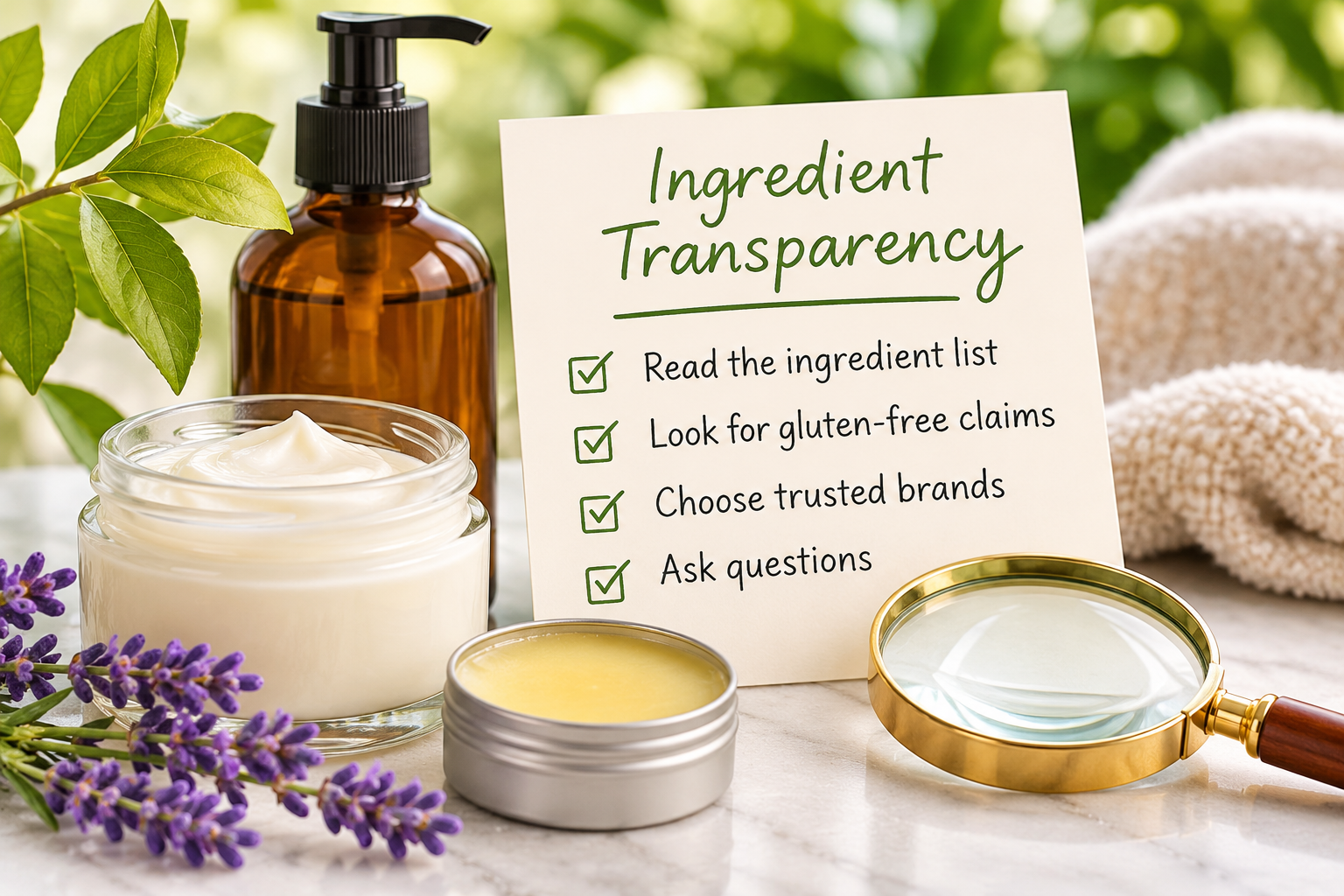
When I founded Kosmatology in 2014, my goal was to create thoughtfully formulated, plant-based skincare for sensitive skin and families.
That mission began when my youngest daughter developed eczema as an infant. As a pharmacist and mother, I wanted to better understand the ingredients going onto her skin and create products that would help support her skin's natural moisture barrier.
That same philosophy continues to guide how I formulate today.
Kosmatology products are formulated without gluten- or corn-derived ingredients.
We focus on carefully selected plant oils, botanical ingredients, and gentle formulations designed for everyday skincare. Our products are also MADE SAFE® Certified, reflecting our commitment to ingredient screening and safer product formulation. Whether you're looking for a gentle foaming hand soap, a moisturizing lotion bar, or a lip balm, we believe you deserve to understand what's in your skincare products.
If you have questions about a specific ingredient or product, we're always happy to help.
Frequently Asked Questions About Gluten in Skincare
-
Gluten applied to intact skin generally does not trigger celiac disease because the condition is associated with ingesting gluten. However, products that may accidentally enter the mouth deserve additional consideration.
-
Most topical skincare products do not need to be gluten-free for someone with celiac disease. Lip balms, lipsticks, and other products that may be swallowed are more relevant to gluten avoidance.
-
People with wheat allergies may react to certain wheat-derived proteins in skincare products. However, a skin reaction does not necessarily mean gluten is responsible. Other ingredients may cause irritation or allergic contact dermatitis.
-
Not automatically. Eczema is associated with skin barrier dysfunction and inflammation, and gluten-free products have not been shown to be universally better for eczema. Gentle formulations and avoiding individual triggers are generally more important.
-
No. Corn is naturally gluten-free. Corn allergies and sensitivities are separate from celiac disease and gluten-related conditions.
-
Kosmatology products are formulated without gluten- or corn-derived ingredients. We prioritize ingredient transparency and are happy to answer questions about individual formulations and ingredient sourcing.
The Bottom Line
For most people, gluten in skincare isn't something to worry about. But for individuals with celiac disease, wheat allergies, or specific ingredient sensitivities, understanding where ingredients come from can be important.
The key is knowing the difference between topical exposure, accidental ingestion, and true allergic reactions.
As a pharmacist and skincare formulator, my advice is simple: Choose products based on your individual needs, understand the ingredients you're using, and don't assume that every ingredient marketed as harmful is necessarily a problem for your skin.
At Kosmatology, we're committed to making ingredient-conscious skincare that helps take the guesswork out of your daily routine.