
How a Compounding Pharmacist Formulates Skincare for Eczema-Prone and Sensitive Skin
When you have sensitive or eczema-prone skin, choosing skincare products can feel like a guessing game. A product labeled “gentle” or “natural” might still leave your skin feeling dry, tight, or uncomfortable. And with so many ingredients and skincare trends to navigate, it can be difficult to know what your skin actually needs.
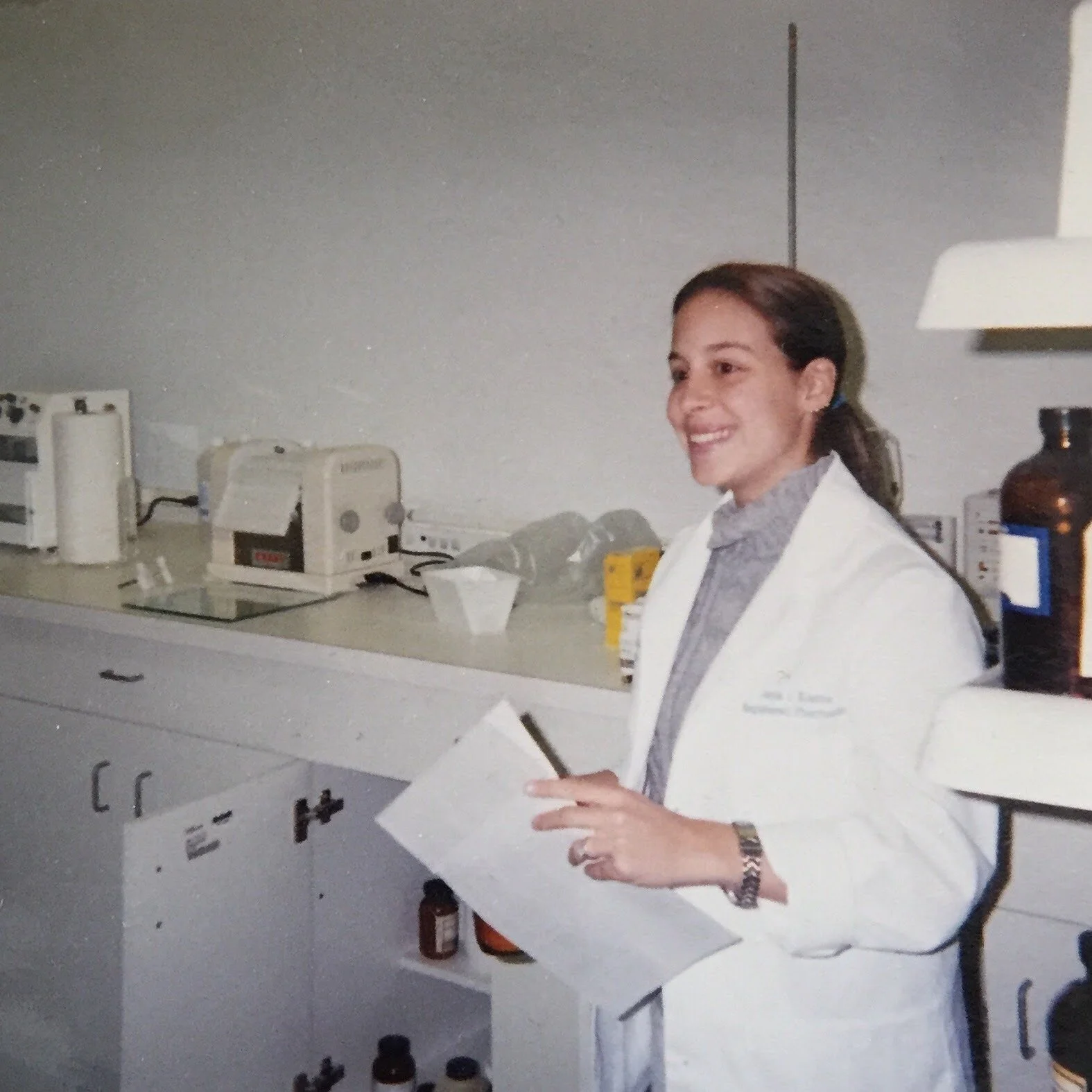
As a Doctor of Pharmacy, compounding pharmacist, and skincare formulator, I approach skincare a little differently.
For me, creating a product isn't simply about choosing ingredients that sound appealing or following the latest beauty trend. It's about understanding how ingredients work together, how a formula interacts with the skin, and how to create products that cleanse and moisturize without unnecessarily disrupting the skin barrier.
That philosophy is at the heart of Kosmatology.
It Started With My Daughter's Eczema
My journey into skincare formulation began long before Kosmatology became a business.
When my youngest daughter developed eczema as an infant, I struggled to find skincare products that met my expectations. I wanted something gentle, effective, and made with ingredients I felt comfortable using on her delicate skin.
As a compounding pharmacist, I was accustomed to working with individual ingredients and developing customized preparations. I understood that a finished product is more than the sum of its ingredients. The concentrations, combinations, and overall formulation all matter.
So I decided to create something myself.
That first product became our Goody-Goody Grapefruit Lotion Bar, and eventually, it became the foundation of Kosmatology.
What began as a solution for my own family grew into a skincare brand focused on thoughtful formulations for people who want simpler, gentler everyday skincare. You can read more about how my daughter's eczema inspired our skincare line
Understanding the Skin Barrier Comes First
Before I formulate a product, I think about one of the skin's most important functions: its protective barrier. The outermost layer of skin, called the stratum corneum, helps retain moisture while protecting the body from environmental irritants. You can think of it like a brick wall. The skin cells are the bricks, and the lipids surrounding them act like the mortar that helps hold everything together. When this barrier is functioning properly, skin is better able to retain moisture and tolerate everyday exposures. Understanding how the skin barrier works is an important part of caring for reactive skin. I explain this further in my complete guide to sensitive skin.
But people with eczema-prone skin often have a less effective skin barrier. This can allow moisture to escape more easily and make skin more susceptible to dryness and irritation. That's why my goal isn't to make skin feel squeaky clean or to pack as many trendy ingredients as possible into one formula.
My goal is to formulate products that work with the skin barrier, not against it.
1. I Start With the Purpose of the Product
Every formula begins with a simple question:
What does this product actually need to do?
A hand soap needs to remove dirt and everyday contaminants. A lotion bar needs to help soften skin and reduce moisture loss. A facial cleanser needs to clean effectively without leaving skin feeling stripped. Those functions determine the ingredients I choose. For example, a hand soap doesn't need to contain harsh antibacterial ingredients to be effective for routine handwashing. Proper washing with regular soap and water is an effective way to remove germs, and the CDC recommends washing for at least 20 seconds.
When developing our foaming hand soaps, I focus on effective cleansing while considering how the formula feels on skin that may be washed frequently throughout the day. For our lotion bars, the focus is different. I want a concentrated, waterless moisturizer that helps soften dry skin and provides a protective layer to reduce moisture loss.
Different products have different jobs, and the formulation should reflect that.
2. I Evaluate Ingredients Beyond Their Marketing Claims
One of the biggest misconceptions in skincare is that an ingredient is automatically better because it's natural or automatically worse because its name sounds unfamiliar. As a pharmacist, I know that ingredients need to be evaluated based on their properties, concentration, intended use, and how they interact with the rest of the formula. An ingredient that works beautifully in one product may not be appropriate in another. I also pay attention to the finished formulation. An ingredient might have beneficial properties on its own, but that doesn't guarantee the finished product will deliver the same results.
This is particularly important when formulating for sensitive skin. For example, essential oils can provide beautiful botanical aromas, but they can also trigger irritation or allergic reactions in some people. That's why Kosmatology offers our completely unscented line, our Free & Clear products for customers who prefer to avoid essential oils and added fragrance.
Being plant-based doesn't automatically mean a product is suitable for everyone.
Thoughtful formulation means recognizing both the benefits and the limitations of an ingredient.
3. I Consider What Happens When Skin Is Washed Repeatedly
Handwashing is one of the most important habits for preventing the spread of germs. But frequent washing can also contribute to dryness, particularly for people with sensitive or eczema-prone skin. I've explained why hand soap can dry out your hands and how to prevent it in another article, you can read here. Soap helps remove dirt, oils, and contaminants from the skin. However, repeated exposure to cleansing agents and water can also affect the skin's natural lipids.
That's why I pay attention to the cleansing process itself, not just whether a soap produces a satisfying lather. One ingredient I particularly appreciate is glycerin. Glycerin is a humectant, meaning it attracts water. It's also naturally produced during traditional soap making.
In Kosmatology's foaming hand soaps, we retain that naturally occurring glycerin rather than removing it. While glycerin doesn't eliminate the possibility of dryness from frequent washing, it's one of the formulation choices I make with skin comfort and health in mind.
I also encourage people to moisturize after washing, particularly when their hands are already prone to dryness.
4. I Keep Moisturizing Simple and Purposeful
When skin is dry, the goal is to help it retain moisture and feel more comfortable. I often see people assume that a moisturizer needs to contain dozens of ingredients to be effective. But a well-designed formula doesn't have to be complicated.
Our lotion bars are a good example.
They're made with a concentrated blend of plant-based ingredients, including shea butter and botanical oils, designed to soften skin and help reduce moisture loss.
One of the advantages of a waterless formula is that it doesn't require the same type of preservation system as a traditional water-based lotion. When water is present in a skincare product, preservatives are needed to prevent bacteria, mold, and other microorganisms from growing. Some water-based lotions utilize certain types of alcohol, which, depending on the amount used and the overall formula, can contribute to dryness or irritation, particularly for people with sensitive or eczema-prone skin. It's important to distinguish these from fatty alcohols, which are actually beneficial moisturizing ingredients.
By eliminating water from our lotion bars, we're able to create a concentrated formula without the need for conventional water-based preservation systems. This allows us to focus on ingredients that help soften the skin and support its natural moisture barrier. The solid format also allows the product to be applied directly to the skin, making it convenient for hands, elbows, heels, and other dry areas.
One important distinction: a waterless product isn't automatically better than a traditional lotion or cream. Both can be useful, depending on the formulation and the needs of the skin.
For me, the advantage of a lotion bar is its simplicity, concentration, and convenient application.
If you're curious about the differences between traditional lotions and solid moisturizers, I've written more about what waterless skincare is and how it works.
5. I Don't Assume More Ingredients Mean Better Results
Skincare trends often encourage us to add another serum, exfoliant, treatment, or step to our routines. But for sensitive skin, adding more products also means introducing more ingredients that could potentially cause irritation or allergic reactions. This is especially important for people with eczema-prone skin, whose skin barrier may already be compromised.
I generally recommend starting with a few essentials:
A gentle cleanser appropriate for your skin
A moisturizer that helps maintain hydration
Daily sun protection when appropriate
Additional products can be introduced based on individual needs, but there's no reason to make a routine more complicated than necessary. If your skin feels tight, stings, or becomes noticeably red after using a product, that's worth paying attention to. And if you have persistent eczema symptoms, a dermatologist can help determine whether prescription treatment or additional care is needed.
Skincare should support your skin, not become another source of stress.
6. I Think About the Entire Formula, Not Just One Ingredient
This is where my compounding pharmacy background has been particularly valuable. In compounding, you learn to consider how ingredients behave together. The texture, consistency, stability, concentration, and method of preparation can all affect the finished product.
Skincare formulation requires that same attention to detail.
Two products may contain similar ingredients but feel completely different on the skin because of their proportions and overall formulation. For example, a facial moisturizer made with plant-based oils can feel lightweight or heavy depending on which oils are selected and how they're combined. This is one reason our Herbal Teen Facial Moisturizer uses oils such as grapeseed and jojoba. The goal is to provide lightweight moisture without the heavy feel of some traditional creams.
I also believe in using ingredients with a purpose rather than adding them simply because they're popular.
A thoughtfully formulated product should be judged by how the finished formula performs not by how impressive the ingredient list sounds.
7. I Believe Ingredient Transparency Matters
People with sensitive skin often spend a lot of time reading labels, trying to figure out which products may work for them. I believe they deserve clear information about what they're putting on their skin. At Kosmatology, our products are MADE SAFE® Certified and Leaping Bunny cruelty-free. These independent programs reflect our commitment to ingredient screening and cruelty-free practices. But certifications are only part of the picture.
That's why we list the complete ingredient list for every Kosmatology product on our website. I want customers to be able to see exactly what's in a product before purchasing it, especially if they have known sensitivities or allergies. I believe ingredient transparency should be standard practice, not something customers have to ask for.
I also believe in helping customers understand why ingredients are included, what a product is designed to do, and when a different option might be more appropriate. For someone who enjoys botanical scents, one of our essential-oil-scented products may be a good choice. For someone who is sensitive to fragrance, our Free & Clear collection may be the better starting point.
There is no single formula that works perfectly for every person. My goal is to give customers the information they need to make informed decisions about their skincare.
What I Want People With Sensitive Skin to Know
After years of working as a pharmacist and skincare formulator, one lesson continues to guide my approach:
Your skin doesn't need the most complicated routine. It needs products that are appropriate for its needs.
If you have eczema-prone or sensitive skin, pay attention to how your skin responds to products rather than relying solely on marketing claims. Choose gentle cleansing, moisturize consistently, and be cautious about introducing too many new ingredients at once. Remember that even natural ingredients can cause reactions, and that eczema is a medical condition that may require treatment beyond everyday skincare.
My goal with Kosmatology has never been to create products that promise to do everything. It's to create thoughtful, plant-based skincare that helps make everyday care a little simpler.
And that philosophy began with a little girl who needed something gentler for her skin.
Frequently Asked Questions
-
A: A pharmacist's education can provide a valuable foundation in ingredient properties, concentrations, compatibility, and formulation principles. However, a product isn't automatically better simply because a pharmacist created it. The finished formulation, quality, and individual skin tolerance are what matter.
-
A: Yes. Natural ingredients, including essential oils and botanical extracts, can cause irritation or allergic reactions in some individuals. People with particularly reactive skin may benefit from choosing fragrance-free products with fewer potential allergens.
-
A: Lotion bars can be a convenient way to moisturize dry skin and help reduce moisture loss. However, not every lotion bar will be appropriate for every person with eczema. Fragrance sensitivity, individual allergies, and the condition of the skin should all be considered. During an active flare, a dermatologist may recommend specific fragrance-free moisturizers and medications.
-
A: Fragrance ingredients are a common cause of allergic contact dermatitis and can irritate some people with sensitive skin. Choosing fragrance-free products can reduce exposure to these potential triggers, although it doesn't guarantee that a product will never cause a reaction.
-
A: People with eczema-prone skin generally benefit from gentle cleansing, lukewarm rather than hot water, avoiding unnecessary scrubbing, and moisturizing promptly afterward. The National Eczema Association and dermatologists can provide additional guidance tailored to individual needs.
Explore Kosmatology's pharmacist-created skincare, including our Free & Clear collection, Foaming Hand Soaps, and Lotion Bars, at Kosmatology.com.
This article is intended for general skincare education and is not a substitute for individualized medical advice. Eczema is a medical condition, and persistent or worsening symptoms should be evaluated by a qualified healthcare professional.

About the Author
Janis Covey, PharmD
Compounding pharmacist and founder of Kosmatology, Janis formulates gentle skincare designed for sensitive skin and families. Her work focuses on ingredient transparency, skin barrier support, and simple routines that help skin stay comfortable and healthy. Learn more about her approach to skincare on the About Kosmatology page.