
How to Protect Your Skin from Chlorine: Minimizing Chlorine Exposure in the Summer

Summer often means long afternoons by the pool. While swimming is a fun and healthy way to cool off, many people notice that frequent pool time can leave their skin feeling dry, tight, or irritated.
Chlorine plays an important role in keeping pools clean and safe by killing harmful bacteria. However, repeated exposure to chlorinated water can also strip natural oils from the skin and hair. Over time, this can weaken the skin barrier and contribute to dryness or irritation.
Many people searching for how to protect skin from chlorine are looking for simple ways to enjoy swimming while minimizing its drying effects. Fortunately, a few small habits can help reduce chlorine exposure and support healthier skin during the summer months.
How Chlorine Affects Skin and Hair (and How to Prevent Chlorine Damage)
Chlorine is a powerful disinfectant used in swimming pools to eliminate bacteria and maintain water safety. While effective, chlorine can affect the skin and hair in several ways when exposure is frequent. Over time, repeated exposure to chlorinated water can contribute to chlorine damage to the skin, especially when the skin barrier becomes weakened and natural oils are stripped away.
Skin Dryness and Irritation
Chlorine removes natural oils that help protect the skin barrier. When these oils are stripped away repeatedly, skin may feel dry, itchy, or tight. For people with eczema or sensitive skin, chlorine exposure can sometimes trigger irritation.
Our guide to Understanding Dry Skin explains how a weakened skin barrier can lead to persistent dryness.
Hair Damage
Chlorine can strip protective oils from the hair shaft, leaving hair dry, brittle, or more prone to breakage.
Eye Irritation
Red or burning eyes are common after swimming in chlorinated pools, particularly when chlorine levels are high.
Respiratory Irritation
In poorly ventilated indoor pools, chlorine vapors can irritate the respiratory tract, especially for people with asthma or respiratory sensitivities.
How to Minimize Chlorine Exposure While Swimming
You don’t have to avoid the pool to protect your skin. These simple habits can help reduce chlorine exposure and support healthier skin during the summer.
1. Shower Before and After Swimming
Rinsing off before entering the pool helps remove sweat, oils, and lotions that can react with chlorine.
Showering after swimming is especially important because it helps remove chlorine residue from the skin before it continues to dry or irritate the skin barrier.
Using a gentle body wash designed for sensitive skin can help cleanse away chlorine without stripping additional natural oils. Our Kosmatology Body Wash is formulated to cleanse effectively while helping maintain the skin’s moisture balance.
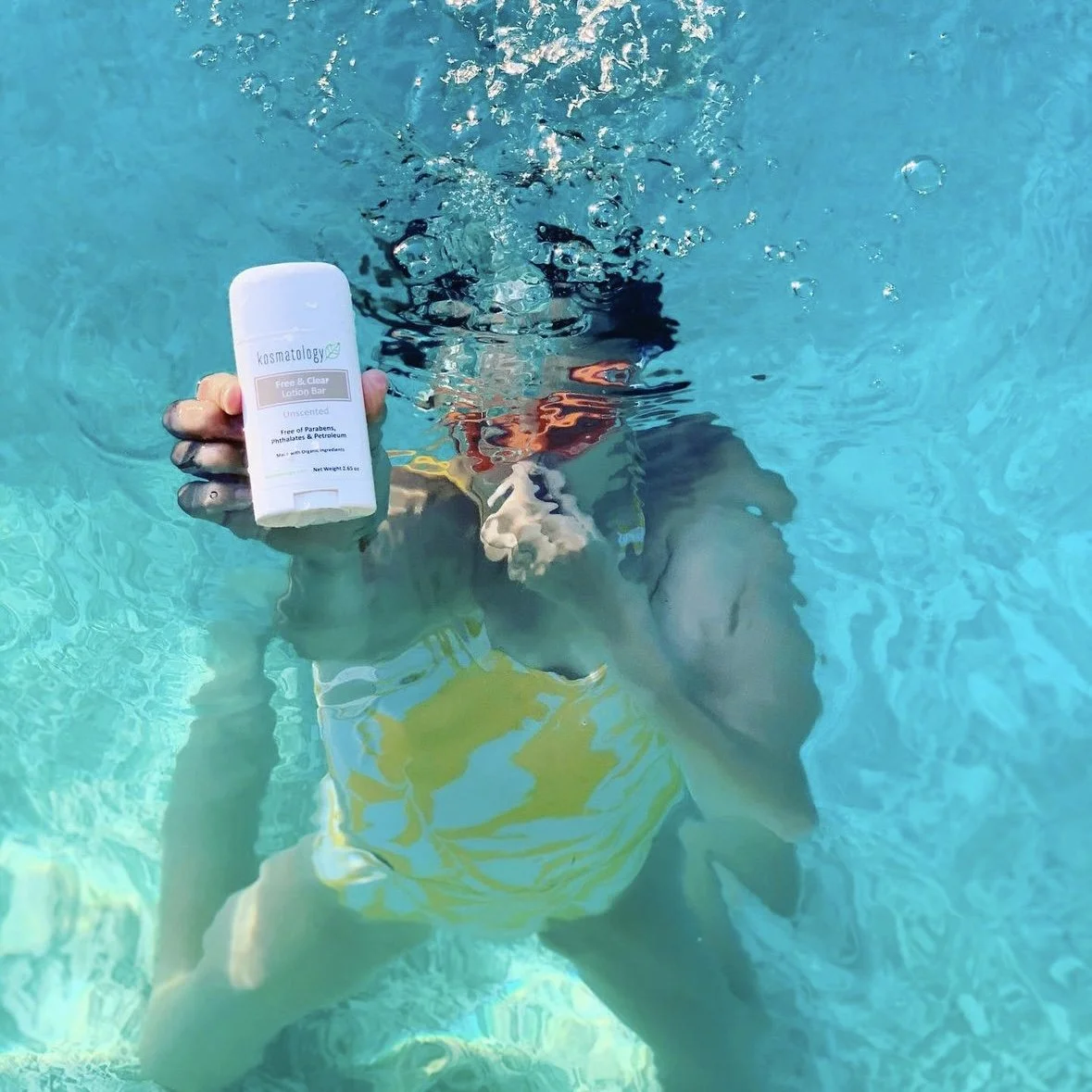
After showering, moisturizing helps replace the oils that chlorine may remove from the skin. Applying a rich moisturizer such as Kosmatology Lotion Bars while the skin is slightly damp helps lock in hydration and support the skin barrier.
2. Wear Protective Gear
Simple protective items can help reduce chlorine exposure.
Swim caps help protect hair from chlorine damage, while swimming goggles reduce irritation to the eyes.
3. Stay Hydrated
Swimming and sun exposure can both contribute to dehydration. Drinking enough water helps maintain overall skin hydration and may help reduce dryness.
4. Choose Outdoor Pools When Possible
Outdoor pools typically have better ventilation than indoor pools. Improved air circulation helps disperse chlorine vapors, which may reduce respiratory irritation.
5. Consider Saltwater Pools
Saltwater pools use chlorine generators that produce chlorine in lower concentrations than traditional pools. Many swimmers find saltwater pools gentler on the skin and eyes.
6. Wear UV-Protective Swimwear
Some swimwear is designed with UV-protective fabrics that help shield skin from sun exposure while also providing a barrier between the skin and chlorinated water.
Supporting Your Skin Barrier After Swimming
Frequent exposure to chlorine can weaken the skin barrier over time. Supporting the skin barrier after swimming can help restore comfort and hydration.
Helpful habits include:
• rinsing skin immediately after swimming
• using gentle, non-stripping cleansers
• moisturizing while skin is slightly damp
• avoiding heavily fragranced products
Our article on Skin Barrier Repair explains why protecting the skin barrier is important for maintaining healthy, comfortable skin.
Many dermatologists also recommend fragrance-free products for people with dry or sensitive skin. You can learn more in our guide on Why Fragrance-Free Skincare Matters.
Final Thoughts
Swimming is one of the best parts of summer, and chlorine plays an important role in keeping pools safe. With a few simple habits—such as showering after swimming, moisturizing regularly, and protecting the skin barrier—you can enjoy time in the pool while minimizing chlorine’s drying effects on your skin.
Frequently Asked Questions About Chlorine and Skin
-
A: Yes. Chlorine can strip natural oils from the skin, which may lead to dryness or irritation, especially with frequent exposure.
-
A: Showering after swimming with a gentle cleanser helps remove chlorine residue and reduce dryness.
-
A: For some people, chlorine may irritate eczema-prone skin. Rinsing off immediately and moisturizing afterward can help reduce irritation.
-
A: Yes. Applying moisturizer after swimming helps replenish oils that may have been removed by chlorine and supports the skin barrier.

About the Author
Janis Covey, PharmD
Compounding pharmacist and founder of Kosmatology, Janis formulates gentle skincare designed for sensitive skin and families. Her work focuses on ingredient transparency, skin barrier support, and simple routines that help skin stay comfortable and healthy. Learn more about her approach to skincare on the About Kosmatology page.
Related Reading
• Understanding Dry Skin: Causes and Treatments
• Skin Barrier Repair: How to Restore a Damaged Skin Barrier
• Why Fragrance-Free Skincare Matters
• The Complete Sensitive Skin Guide
• Best Body Wash for Eczema and Sensitive Skin